
Prefabricated Bathroom Units (PBU)
A Prefabricated Bathroom Unit (PBU) is a bathroom unit that is preassembled off site. A PBU comes complete with finishes, sanitary wares, concealed pipes, conduits, and ceiling and bathroom cabinets before it is delivered and installed on site.
Last updated 19 March 2026
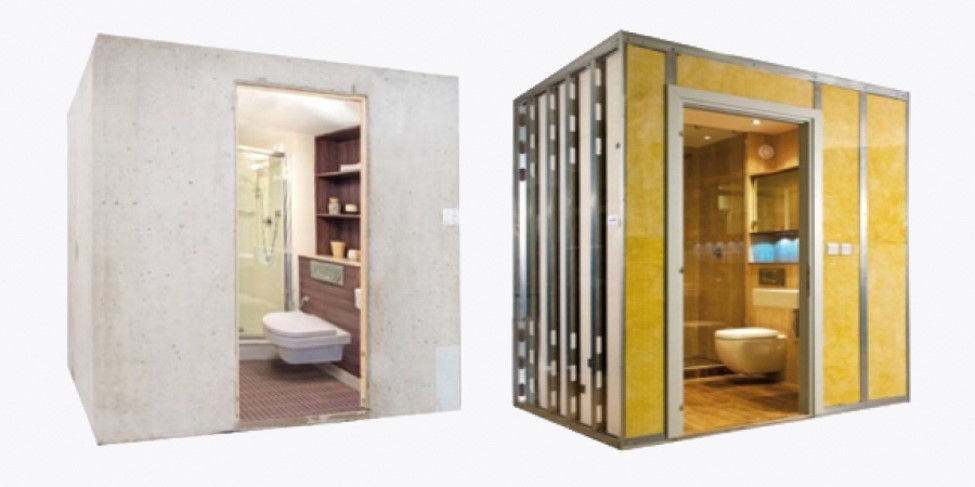
Benefits of PBU adoption
The adoption of PBUs offers significant efficiency and quality benefits for the construction industry in Singapore.
Time and Manpower Savings: By manufacturing bathroom units in controlled factory environments while other site works proceed simultaneously, PBUs can reduce construction time by up to 30% at the trade level and cut overall manpower needs significantly.
Better Quality and Consistency: Factory production ensures high workmanship quality with thorough factory inspections, resulting in durable and uniform products with reduced defects.
Improved Site Conditions: With most bathroom finishing works completed off site, on-site dust, noise, and waste are minimised, creating cleaner and safer construction sites.
What to consider when using PBUs
When adopting PBUs, project teams must ensure compliance with Singapore’s regulatory standards and follow guidelines set out by the Building and Construction Authority (BCA). Key considerations include:
Early Contractor Involvement – Engage PBU suppliers and main contractors early during the design phase. This allows the layout and detailing of PBUs to address structural, architectural, and mechanical, electrical, and plumbing (MEP) requirements before fabrication begins, preventing costly design changes later.
Site and Project Management – Consider the weight, installation method, and placement of PBUs when selecting lifting equipment capacities. Advanced planning is essential to ensure PBUs are fully assembled in the factory and delivered to the site just in time, minimising double handling and delays.
Maintenance, Replacement, and Renovation – Every PBU should have a Manufacturer’s Label with key unit details and supplier contact information. Like conventional bathrooms, tile finishes can be replaced, and barrier-free accessibility designs should be included. A homeowner manual should be developed upon project completion and provided to both individual homeowners and the Management Corporation Strata Title (MCST). Homeowners should engage trained renovation contractors who follow the provided instructions and use suitable tools.
Compliance with Regulations – PBUs must comply with Singapore’s regulatory standards, including BCA’s PBU performance requirements for structural integrity, water-tightness, fire safety, and acoustic performance. Please refer to the prevailing Buildability Code of Practice for Requirements on PBUs.
Helpful PBU Resources
PBU Performance Requirements [PDF, 531 KB]: Detailed technical standards for PBU design and construction.
List of PBU Suppliers That Meet the Performance Requirement: A directory of approved PBU suppliers whose systems comply with BCA’s Performance Requirements.
PBU Manufacturer Accreditation Scheme (PBU MAS): Accreditation recognising PBU manufacturers with proven quality, capability, and compliance standards.
Good Industry Practice Guidebook for PBUs [PDF, 3.1 MB]: A practical guide on best practices for designing, producing, installing, and maintaining PBUs.