
Site Management Platforms (SMPs)
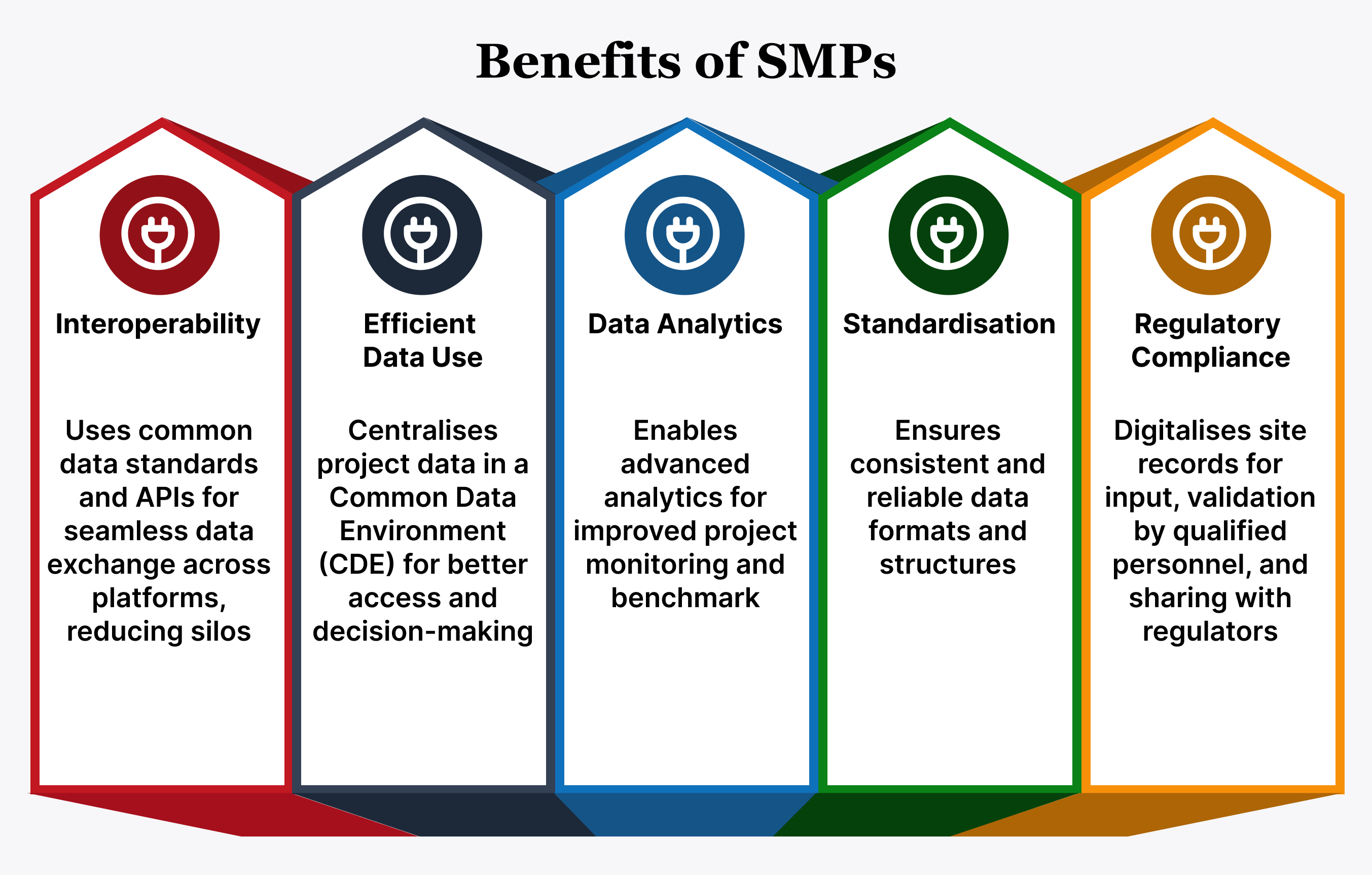
Site Management Platforms (SMPs) are digital tools that collect and organise construction site information in one place. A core part of ops-tech enabled inspections, the digitalised information exchange of SMP make it easier for project teams to communicate and share information, allowing seamless data exchange throughout a project.
Last updated 16 March 2026

By using SMPs, companies can reduce manual paperwork and automate site documentation. This helps firms track important areas like cost, time, quality, safety, and manpower more effectively. The data collected can also be analysed to support better decisions and improve project outcomes.
Benefits of SMPs
SMPs streamline construction site management by automating data collection and reporting. The platform directly extracts and processes vital site data, such as concrete test results and worker records, which previously required extensive manual effort from contractors. By capturing and consolidating valuable data, SMPs enable effective project management and progress monitoring, helping stakeholders save time, reduce costs, and achieve greater certainty in their project management processes.
SMP Use cases
List of use cases for SMP
Non-Regulatory Site Management Use Cases | Structural Safety Data Management Use Cases |
|---|---|
BIM model for construction sequencing and risk management | Access to real-time data for proactive compliance monitoring |
Resource optimisation through digital tracking | Streamlined document verification process |
Project timeline optimisation - Early identification of delays | Reduced man-hours for regulatory compliance |
Integrated Common Data Environment | |
Manpower Management |
How BCA uses SMPs in its audit Process
BCA recognises that firms are at different stages of digital transformation. To support this, BCA has adopted a tiered approach to site audits, leveraging Site Management Platforms (SMPs) to match each project's digital readiness.
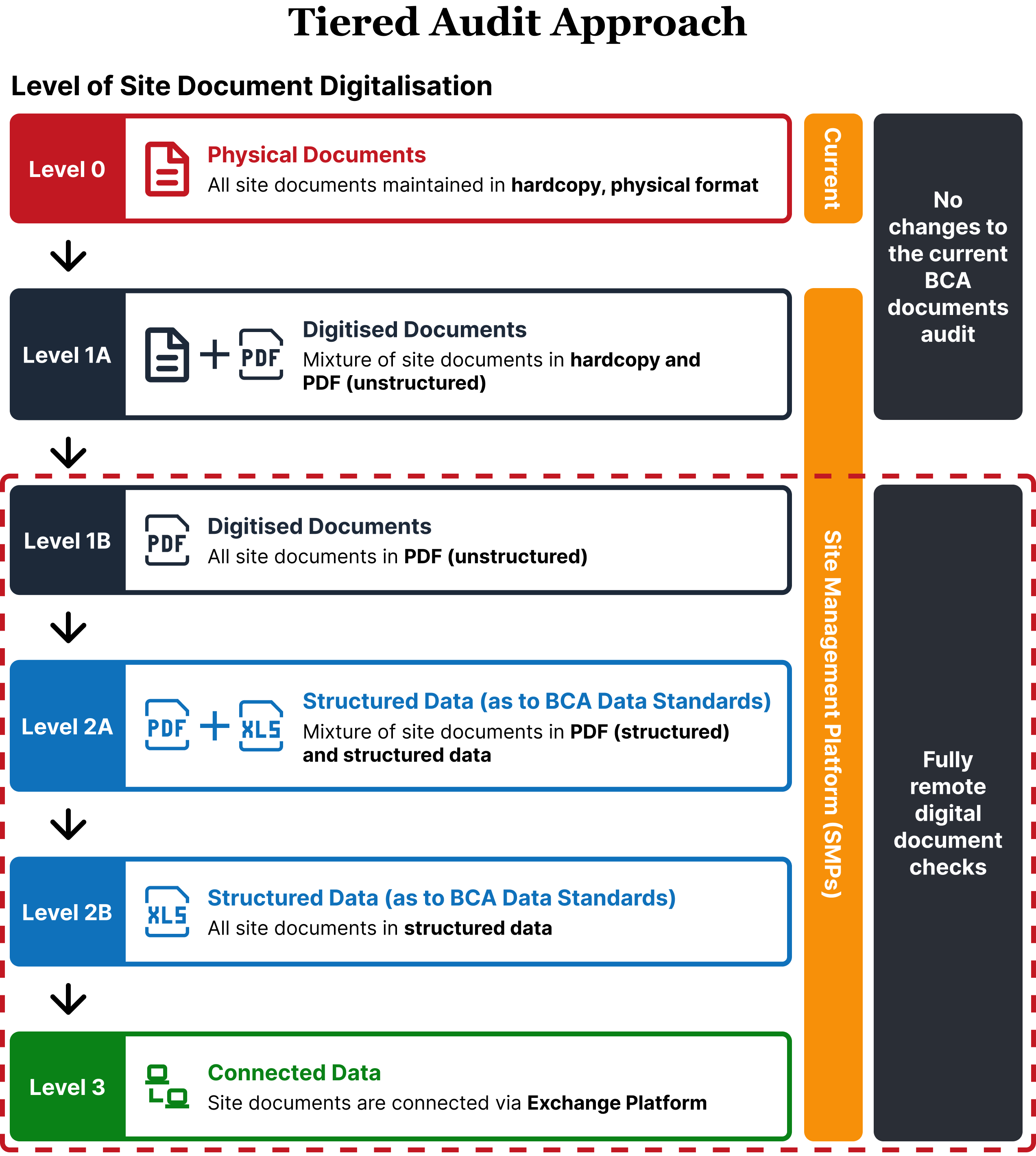
Level 0 and Level 1A: Traditional audits
For sites with minimal digitalisation, BCA continues to conduct audits through on-site inspections and physical document checks, following standard procedures.
Level 1B, Level 2A, and Level 2B: Partial digital audits
At these levels, sites have some digital capabilities. BCA officers can access and verify certain documents remotely through SMPs before visiting the site. This reduces the time and effort needed to retrieve site documents for structural audit inspections. It helps the industry develop good habits in filing documents systematically and in an organised manner.
Level 3: Fully digital audits
At the highest level of digital integration, audits are largely automated. Site data is shared directly with BCA’s data exchange platform, allowing real-time compliance monitoring and verification with minimal physical touchpoints.
This flexible, tiered system ensures effective regulatory compliance while encouraging firms to advance their digital capabilities. As firms progress, they benefit from more efficient audits.
Streamlined virtual document verification
For projects at Level 1b and above, BCA offers two convenient options for verifying documents through SMPs:
Option 1: (Preferred)
When BCA initiates an audit, grant BCA access to your SMP.
Organise documents according to this template [DOCX, 14 KB].
Maintain updated documentation in specified formats.
Option 2:
When BCA initiates an audit, grant BCA access to your SMP.
Ensure all documents are organised in designated folders.
Provide clear file paths for each document category (refer to this template [DOCX, 14 KB]).
By embracing SMPs and digital workflows, BCA is streamlining the audit process, improving efficiency, and supporting the construction industry’s journey toward full digitalisation.
How to establish a SMP
To begin adopting a SMP for your firm, you will find all the necessary information in the SMP Guidebook [PDF, 7.1 MB].
To learn the best data standards practices when using a SMP, please refer to the Site Management Data Standards guidebook.