
General
Exemptions for building works requiring approval
Property type
Landed
Learn about the exemptions for building works requiring approval which give landed house owners more design flexibility.
Homeowners who intend to build or renovate their landed property need not obtain approval from BCA if the proposed building works fall under the list specified on Building Works Not Requiring Approval. For building works that do require approval, there are exemptions to the Building Control regulations for landed houses that are built for owner’s own use. These exemptions are meant to provide owners with more flexibility in the design of their own houses due to aesthetics or lifestyle preferences.
This page serves as an overview of the exemptions of the Building Control regulations. Homeowners are advised to read this page together with their appointed Qualified Person (QP).
A QP must:
Be registered as an Architect with the Board of Architects (BOA), or a Professional Engineer with the Professional Engineers Board (PEB).
Hold a valid practising certificate issued by the BOA or PEB.
Refer to the Third Schedule of the Building Control Regulations to determine the QP who may be appointed to sign or prepare building works.
Building works exempted under the approved document
Exemptions for headroom and ceiling height
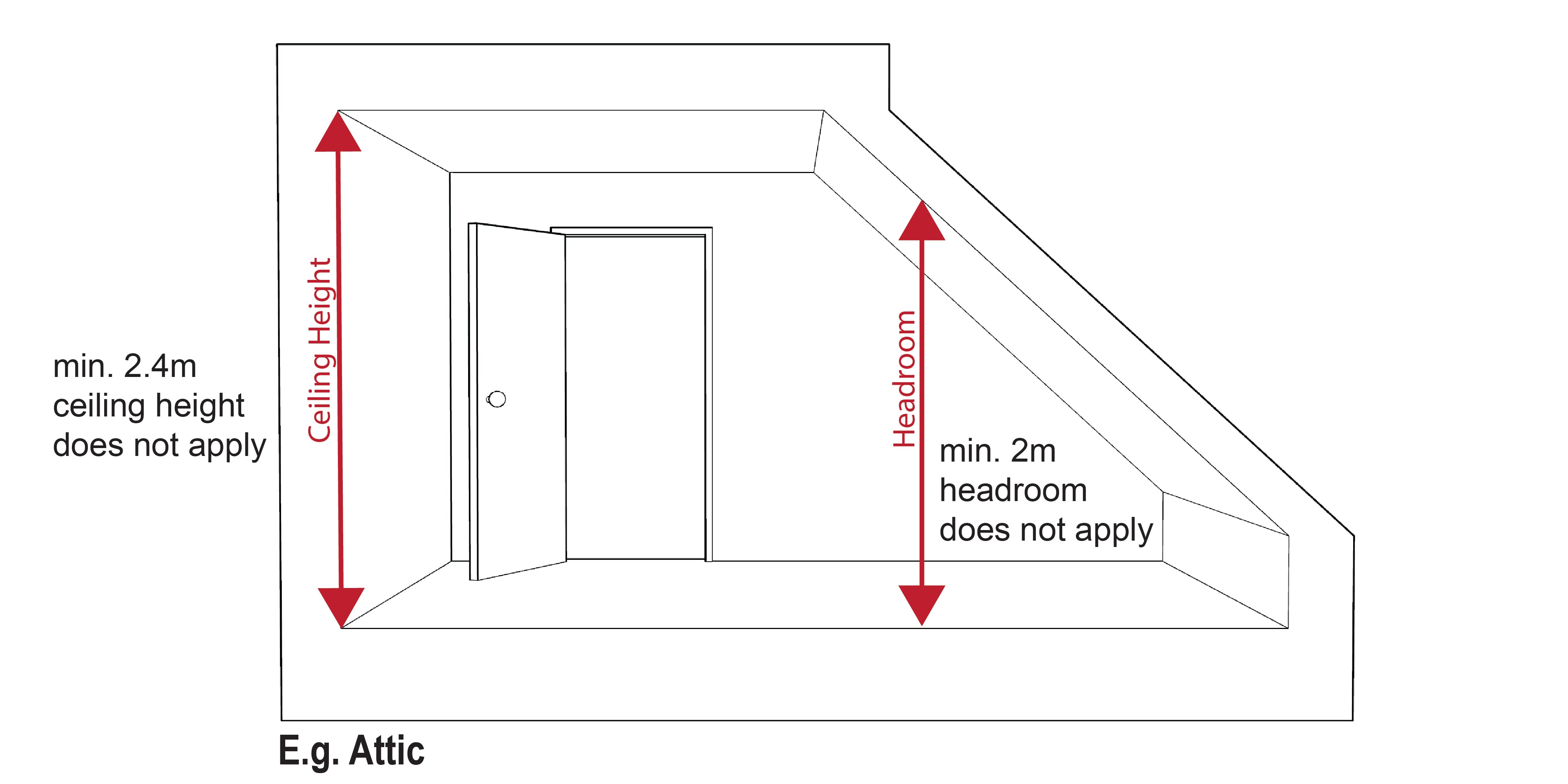
The following headroom and ceiling light requirements do not apply to landed houses.
Normally, rooms in a building must have:
Adequate headroom
Adequate height
However, these requirements do not apply to:
Attics that:
(i) Have an area of 10 square metres or less
(ii) Are part of a house built for the owner’s personal use
Toilets or bathrooms in a house built for the owner’s use
C.2.1 Any room or space in a building must be provided with –
(a) adequate headroom; and
(b) adequate height,
for the intended uses of the room or space.
C.2.2 The requirements in paragraph C.2.1(a) and (b) do not apply to any of the following rooms or spaces:
(a) any attic that –
(ii) does not exceed an area of 10 square metres; and
(iii) is in a house that is built for the owner’s own use;
(d) any toilet or bathroom in any house built for the owner’s own use;
Exemptions for staircases
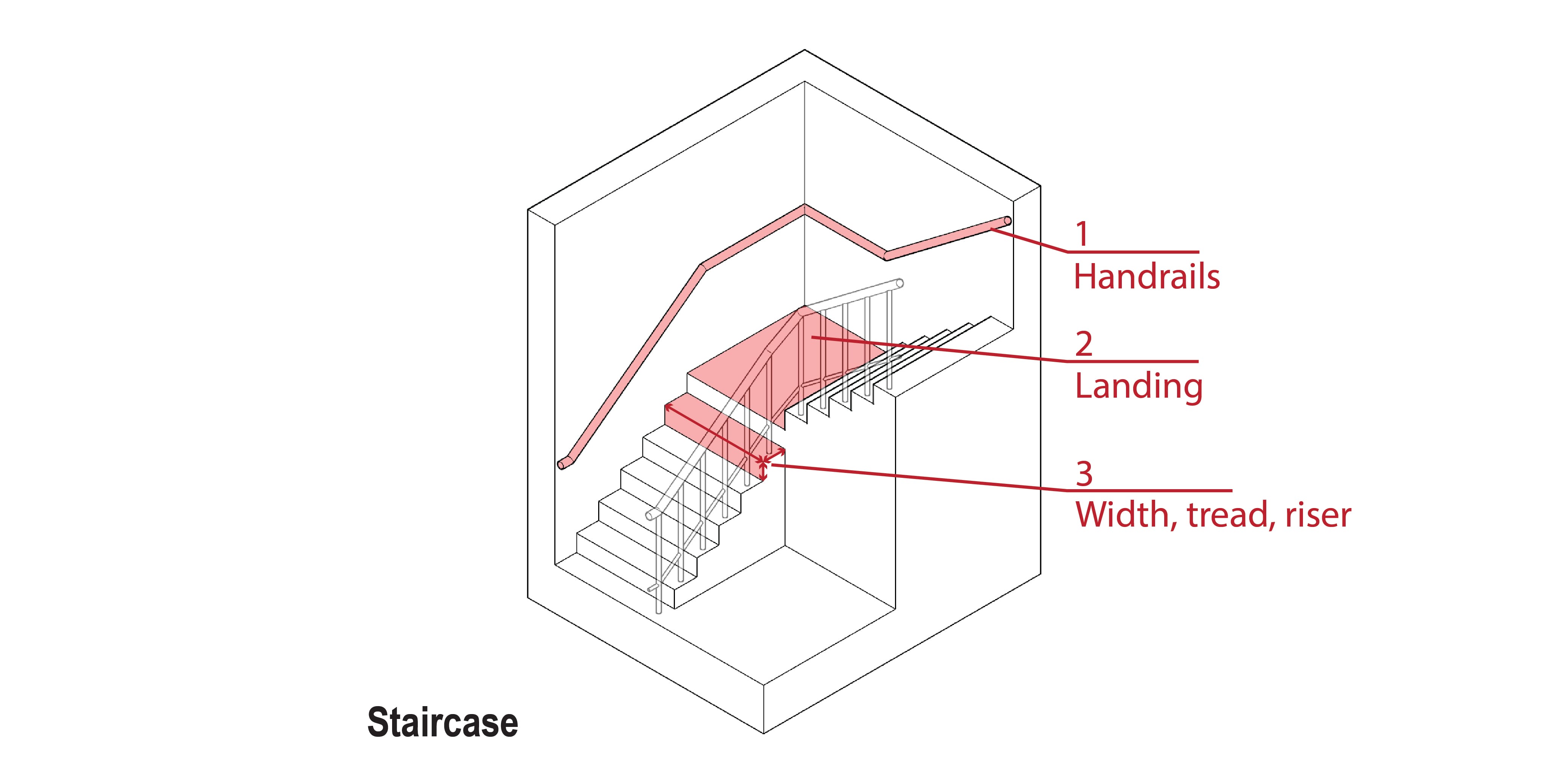
The following staircase safety requirements do not apply to landed houses built for the owner’s use:
(a) Have handrails or guides for support
(b) Have landings to break a fall and provide a place for rest
(c) Have sufficient width, tread, and riser to avoid injury
E.2.2 A staircase must have –
(a) handrails or guides to assist movement (in accordance with paragraph E.3.6.1);
(b) landings to break a fall and provide a place for rest;
(c) sufficient width, tread and riser to avoid injury;
Exemptions for safety from falling
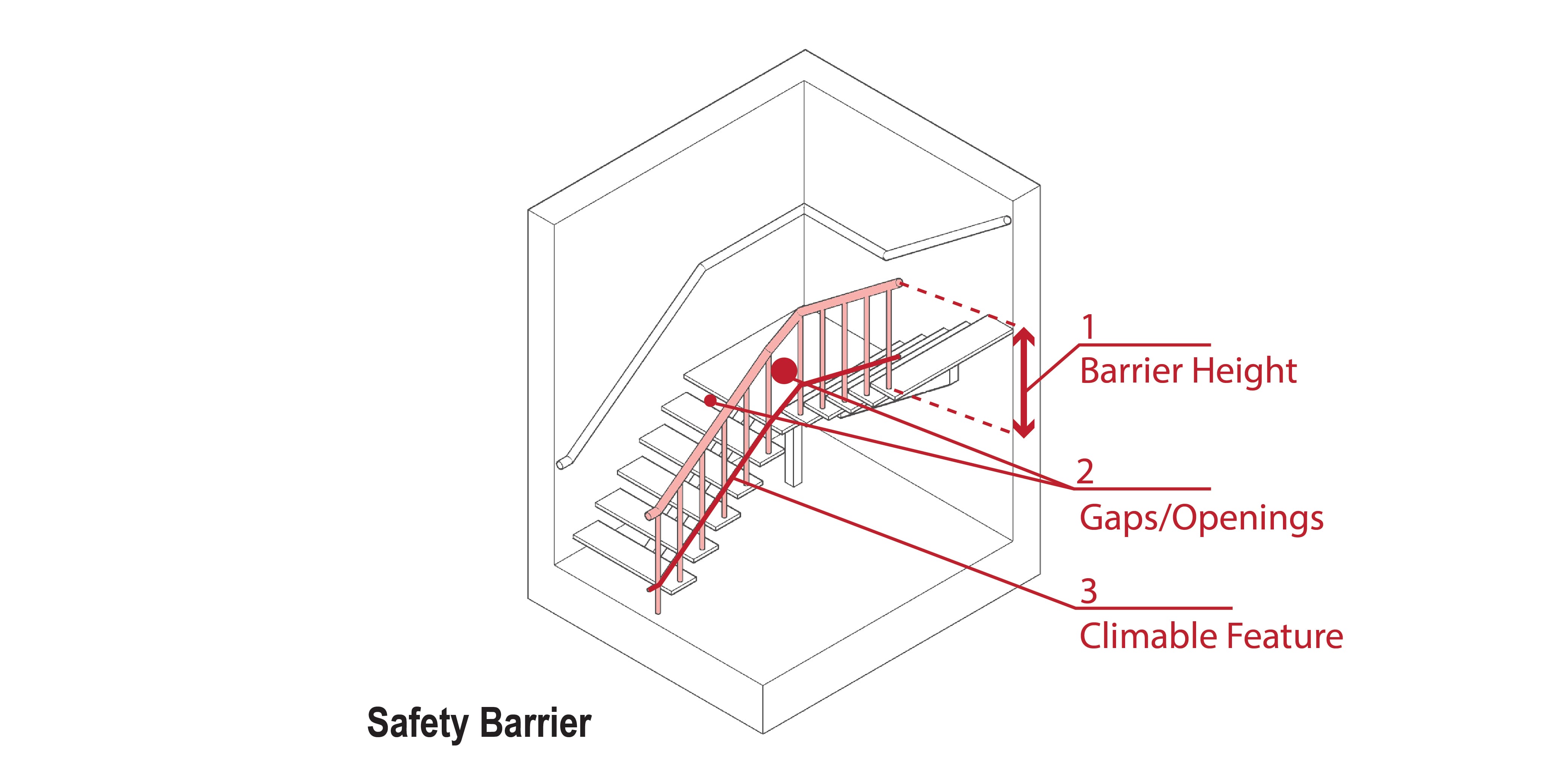
The following safety barrier requirements do not apply to landed houses built for the owner’s use.
(a) Be high enough to prevent a person from falling
(b) Have no gaps that will allow a person to pass through
(c) Be designed to prevent a person from climbing over
H.2.1A Where a barrier is installed to prevent a person from falling from a height, the barrier –
(a) must be sufficiently high to prevent a person from falling over the top of the barrier;
(b) must not have any opening or gap that will allow a person to slip through the barrier; and
(c) must not have any feature that facilitates a person climbing over the barrier.
Exemptions for lighting
Natural lighting is not a requirement for landed homes built for the owner’s use. Homeowners may opt to use alternative forms of lighting (eg artificial) to ensure the safety of occupants.
F.2.2 Residential buildings, other than houses built by the owners for their own use, shall be provided with natural lighting for the purpose of paragraph F.2.1.
Exemptions for ventilation
Natural ventilation is not a requirement for landed homes built for the owner’s use. Owners of landed houses built for their own stay may opt to use mechanical ventilation or air-conditioning (with mechanical ventilation) to supply occupants with fresh air.
G.2.2 Residential buildings, other than houses built by the owners for their own use, shall be provided with natural ventilation for the purpose of paragraph G.2.1.
Summary of compliance requirements for landed homes built for owner’s use
Summary of building sections and their exemption status
Section | Building Requirement | Exemption Status |
|---|---|---|
A | Introduction | General Information |
B | Structural Design and Construction | No exemption – Compliance Required |
C | Headroom & Ceiling Height | Exempted only from the following: (a) adequate headroom; and (b) adequate height, for the intended uses of the room or space. The requirements in paragraph C.2.1(a) and (b) do not apply to any of the following rooms or spaces: (a) any attic that – (ii) does not exceed an area of 10 square metres; and (iii) is in a house that is built for the owner’s own use; (d) any toilet or bathroom in any house built for the owner’s own use; |
D | Accessibility in Built Environment | NA |
E | Staircases | Exempted only from the following: E.2.2 A staircase must have – (a) handrails or guides to assist movement (in accordance with paragraph E.3.6.1); (b) landings to break a fall and provide a place for rest; (c) sufficient width, tread and riser to avoid injury; |
F | Lighting | Exempted only from the following: F.2.2 Residential buildings, other than houses built by the owners for their own use, shall be provided with natural lighting for the purpose of paragraph F.2.1. |
G | Ventilation | Exempted only from the following: G.2.2 Residential buildings, other than houses built by the owners for their own use, shall be provided with natural ventilation for the purpose of paragraph G.2.1. |
H | Safety from Falling | Exempted only from the following: H.2.1 Where there is a vertical drop of 1.0 m or more, appropriate measures shall be taken to prevent people from falling from a height. H.2.1A Where a barrier is installed to prevent a person from falling from a height, the barrier – (a) must be sufficiently high to prevent a person from falling over the top of the barrier; (b) must not have any opening or gap that will allow a person to slip through the barrier; and (c) must not have any feature that facilitates a person climbing over the barrier. H2.1B Where glass is used as a part or whole of barrier, the glass used shall be able to withstand the loading for which it is designed and shall not be susceptible to spontaneous breakage or to shattering. |
I | Energy Efficiency | NA |
J | Roof | No exemption – Compliance Required |
K | Lifts & Escalators | No exemption – Compliance Required |
L | Lightning Protection | No exemption – Compliance Required |
M | Safety of Windows | No exemption – Compliance Required |
N | Use of Glass Height | No exemption – Compliance Required |
O | Protection from Injury by Vehicles in Buildings | No exemption – Compliance Required |
For a complete list of insignificant building works which do not require approval from BCA, please refer to the First Schedule of Building Control Regulations.