
People
A mindset of excellence
10 January 2020
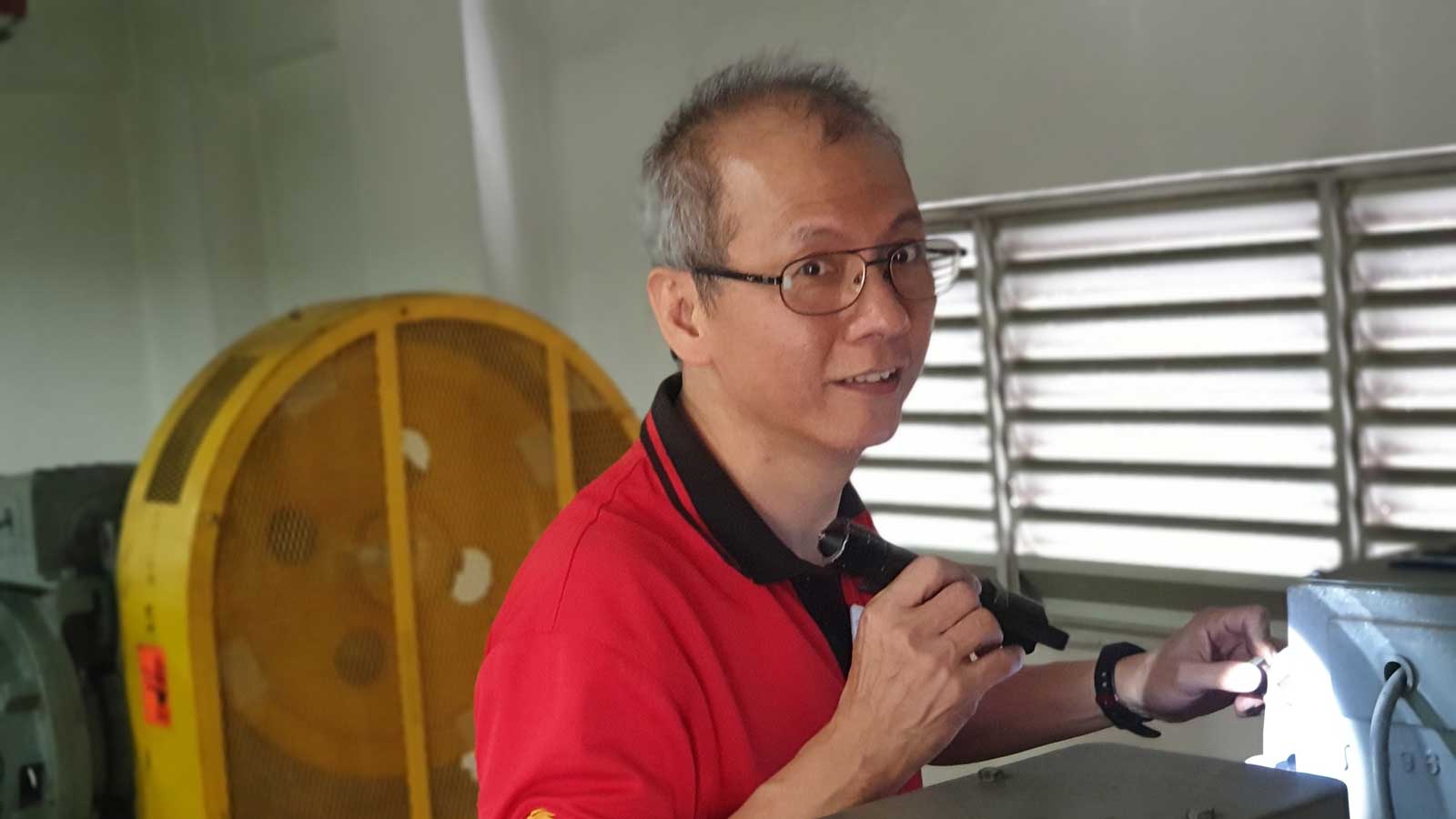
Er Ng Teck Eng joined the Lift and Escalator industry as a young trainee assistant engineer before working his way up the ranks. Today, he works in BCA to ensure the safety of vertical transportation systems in Singapore.
By BCA
Possessing an engineer’s problem-solving mindset is essential no matter which industry you go into. And of course, the desire to keep on learning. That is what makes Engineering such a fulfilling and satisfying career for me.— Er Ng Teck Eng
With his thirst for learning and a continual desire to deepen his professional knowledge, Engineer Ng Teck Eng is a poster boy for the Lift and Escalator industry.
After completing his diploma in Electrical Engineering in 1981, Er Ng joined Otis Elevator as a young trainee assistant engineer. At the age of 39 and armed with a company scholarship, he chose to go back to school for a part-time degree in Bachelor of Technology. He later went on to obtain a Master of Science from NUS in 2008 and registered as a Professional Engineer in 2012. Over the span of this period, he worked his way up the ranks in the Lift and Escalator industry, deepening and broadening his skills and knowledge in this area.
Today, with 36 years of experience as a Lift and Escalator engineer under his belt, Er Ng works in BCA to inspect and test lifts, ensuring that this ubiquitous vertical transportation system remains safe and pleasant to use for everyone.
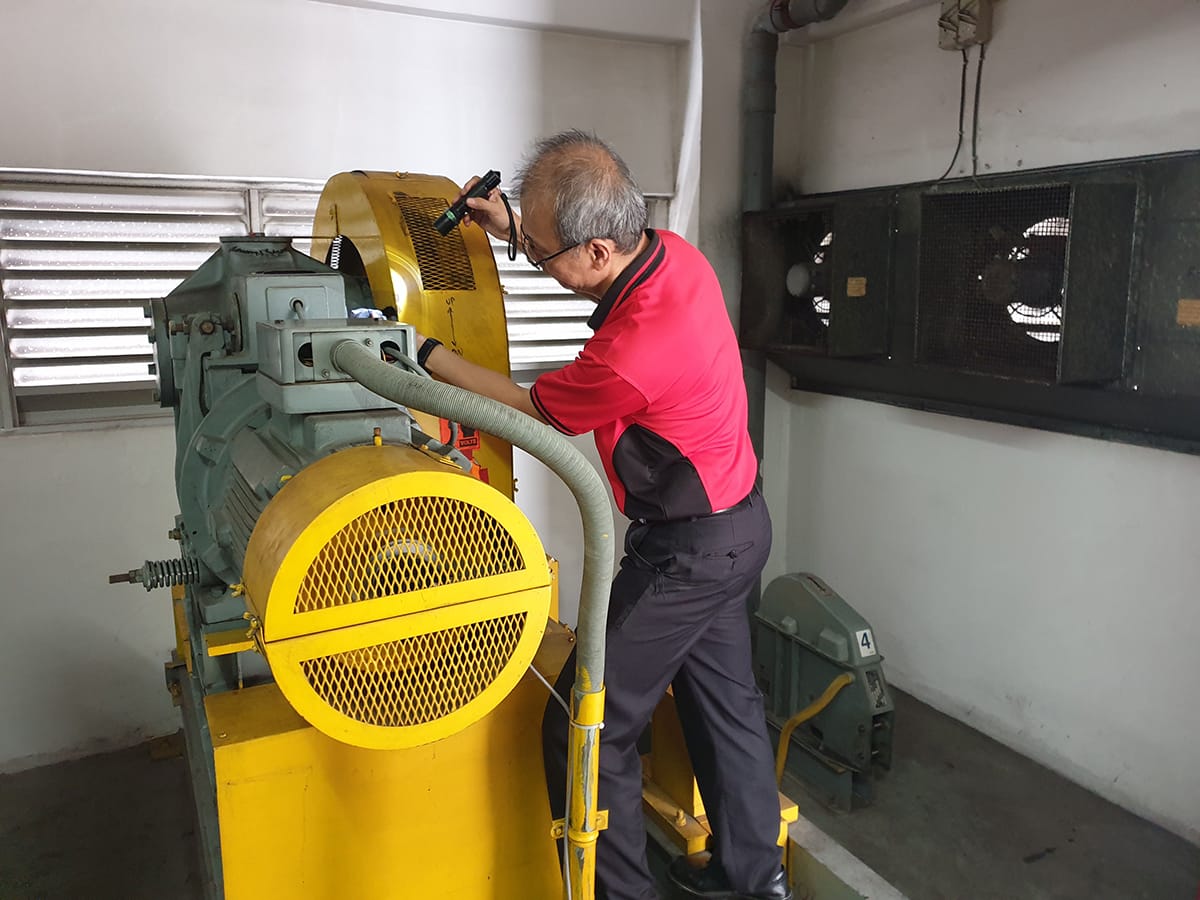
At the age of 39 and armed with a company scholarship, he chose to go back to school to further his studies. He graduated with a Master of Science from NUS in 2008 and registered as a Professional Engineer in 2012.
Moving beyond 3D to RM&D
Recounting his early days as a young assistant engineer, Er Ng pointed out that his chosen trade was known to be a “3D” experience – dark, dirty and dangerous. But with the advent of technology, the switch relay systems in lifts gave way to PCB-based logic systems driven by powerful microprocessors. Integration of other mature technologies such as digital signal processing, networking and miniaturisation also revolutionised lift system design and maintenance, allowing lift technicians to remotely monitor and diagnose problems in lifts.
Er Ng asserted, “Remote Monitoring and Diagnostics (RM&D) would allow us to track the health status of lifts and escalators off-site through sophisticated sensors and internet-based connection. Technology advancements in RM&D would make lift maintenance easier and more cost-effective, since early detection of failures also enhances the reliability of lifts and escalators by allowing predictive – as opposed to reactive maintenance to be carried out.”
A craftsman’s eye for perfection
In Er Ng’s view, getting lifts to function efficiently goes beyond operational skills. “Lift adjustment requires a craftsman’s eye for detail. You need to fine-tune it until all noise, vibration and other disturbances are eliminated. The doors and floor positioning must be very precise. Safety devices must be correctly set up and installed. Once lift adjustment is done to perfection, the lift user experience will be smooth, and it will also enhance the reliability of the lift in the long run,” he says.
This mindset for excellence is what Er Ng hopes to transmit to each young colleague he mentors in the course of his work. While their tertiary training has equipped them with strong technical knowledge, Er Ng hopes to shorten their learning curve by transferring to them the know-how that he has accumulated through years of hands-on industry experience.
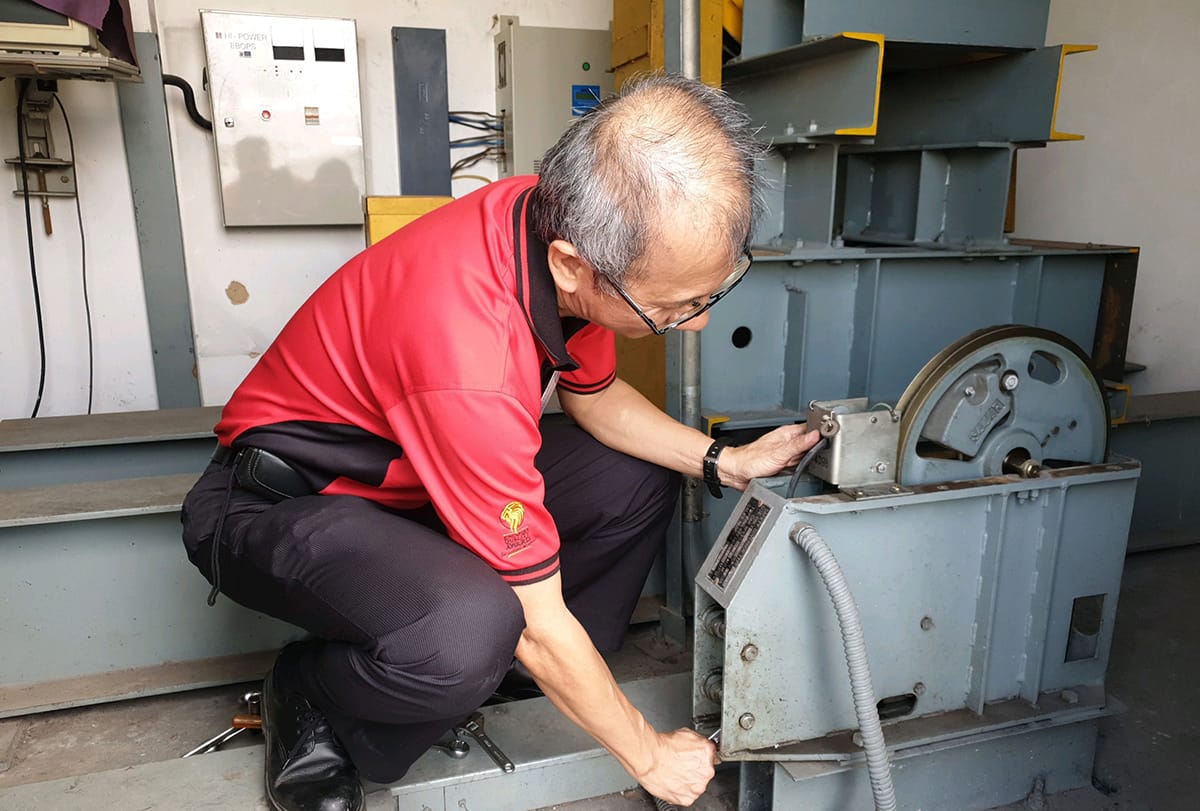
To Er Ng, lift adjustment requires a craftsman’s eye for detail. It is this mindset for excellence that he hopes to transmit to each young colleague he mentors in the course of his work.
Solving problems, one at a time
Looking forward, Er Ng anticipates a Lift and Escalator specialist’s job to become multi-disciplinary in nature. He says, “The convergence of technologies and material innovation in Lift and Escalator systems means that pure electrical or mechanical training will no longer be enough in the future. You will need to know software or even Internet-based engineering in order to maintain complex lift systems.”
“However, certain fundamentals will never change. Possessing an engineer’s problem-solving mindset is essential no matter which industry you go into. And of course, the desire to keep on learning. That is what makes Engineering such a fulfilling and satisfying career for me.”