
Projects and Solutions
From Idea to Impact: Real solutions are being developed and piloted in real-world use cases, with support from BCA. Explore these real-world projects and solutions here.
Last updated 18 March 2026
BCA has built a strong portfolio of Built Environment (BE) technologies by working closely with both public and private sector partners. These new innovations display potential to future-proof Singapore’s BE sector and support the goals of the Built Environment Industry Transformation Map (BE ITM). Through targeted R&D programmes and initiatives, BCA is ready to partner with industry stakeholders to help them enhance their capabilities and adopt new technologies.
See all the latest innovations that we have supported below:
BETA Catalyst Funding Programme
Innovative Earth Retaining & Stabilising Structures (ERSS): Post-Tensioned Waler System
High Performance Plunge-in King Post for Top-Down Building Construction
Economic Corrosion-Resistant Concrete for Deep Foundation Elements with B600 Rebar
Artificial Intelligence for Mixing (AiM)
The listed projects above have been completed at the date of writing.
Learn more about the BETA Catalyst Funding Programme.
Built Environment Accelerate-to-Market Programme (BEAMP)
Advanced Construction Materials
Projects currently ongoing, keep a lookout for details soon.
Advanced Design and Fabrication
Projects currently ongoing, keep a lookout for details soon.
Automation for Robotics and Construction
Drone Photogrammetry for Construction Progress and Surveying
Automated Installation of Noise Barrier Panels
Automated Floor Tile Grouting
Automated Concrete Grinding of Wall and Ceiling Surfaces
Building Inspection, Maintenance, and Facility Management
Projects currently ongoing, keep a lookout for details soon.
Construction Site Safety
Projects currently ongoing, keep a lookout for details soon.
Digital Asset Delivery and Project Management
Intelligent Remote Monitoring System for Waterproofing
AI-Based Video Analytics for Progress Monitoring
Smart Estate Management
Projects currently ongoing, keep a lookout for details soon.
Sustainability
Automated Collection of Carbon Emission Data
The listed projects have been completed from BEAMP Cycle 4 at the date of writing.
Have an innovative solution for the Built Environment? Or are you an industry stakeholder seeking new ideas for existing challenges?
Discover more about BEAMP and register your interest today.
Innovations Within BCA Braddell Campus
Ongoing Trial: Robotics and Automation Enabling Infrastructure (R&A EI) Sandbox
An exciting trial is underway at BCA Braddell Campus. This sandbox trial project aims to boost technology adoption and enhance EI capabilities in the BE sector. It does this by creating a vendor-agnostic reference site using an open-source Robotic Middleware Framework (RMF). The open-source RMF allows robots from different manufacturers to work together and connect with shared infrastructure, like lifts. This means robots can move between floors on their own, making operations smoother and more efficient.
The current trials and testing of R&A EI solutions for Facilities Management (FM) are developed to:
Test and validate R&A EI solutions in a stable, controllable, reasonably dynamic and realistic environment ;
Enable seamless interoperability among solutions from different providers and shared building infrastructure ;
Allow robots to navigate the building autonomously.
Development and Test-bedding of Tele-Operated Excavator Operations
With support from the National Robotics Programme (NRP), BCA and A*STAR created a tele-operated excavator and set up a test site at BCA Braddell Campus as part of the Built Environment Innovation Hub (BEIH).
This system allows operators to control excavators from a distance using a command centre. Now, one person can do the jobs of a machine operator, surveyor, and banksman, saving time and reducing the need for extra workers.
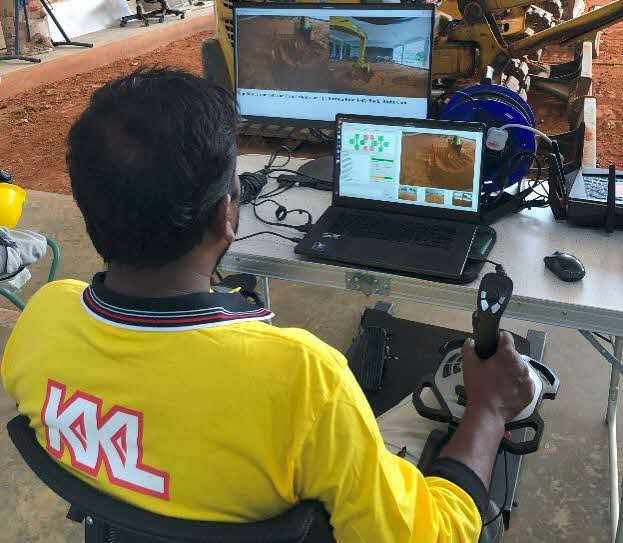
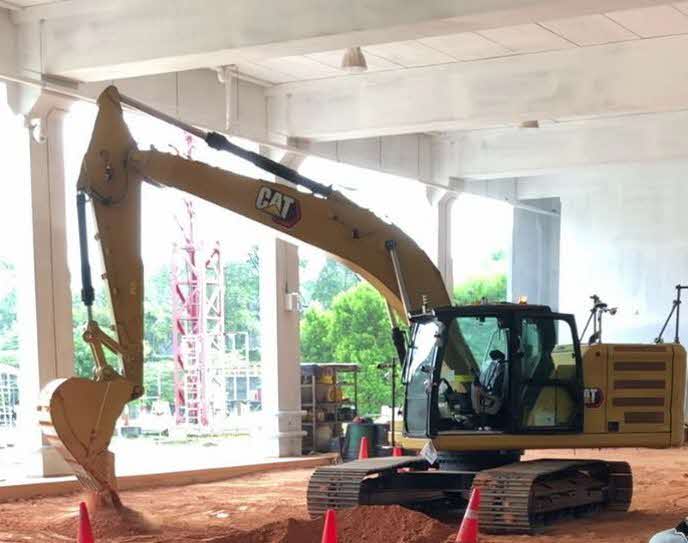
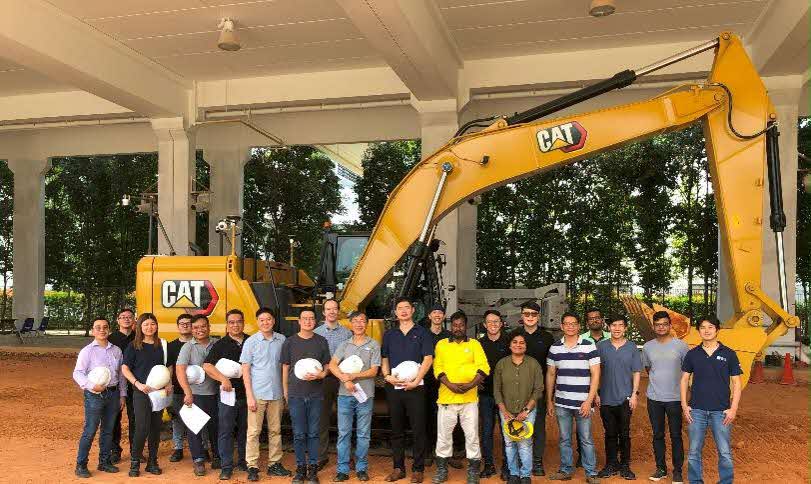
To further finetune the system, trials were needed for excavation works. In tandem with the Ministry of Manpower (MOM) and Workplace Safety and Health Institute (WSHI) to ensure a safe environment with appropriate safety features, the excavator pit at BCA Braddell Campus ticked the boxes as a dedicated space for excavator testing. Operational and safety tests were conducted, including: excavator manoeuvring, excavation works, and emergency stop and collision detection using the tele-operation mode.
This innovation not only enhances safety & productivity in earthworks, but also represents a key step towards autonomous and scalable technology. The BEIH is proud to be a key contributor to the success of the development and test-bedding of the Tele-Operated Excavator Operations, reinforcing our mission as a focal point for Innovation & Technology (I&T) activities.
Next-Generation Cooling Technologies
In 2019, BCA embarked on a research collaboration to transform BCA’s Zero Energy Building (ZEB) into a positive energy building. This project was done in partnership with the Singapore-Berkeley Building Efficiency and Sustainability in the Tropics (SinBerBEST), a research entity under the National Research Foundation CREATE Programme.
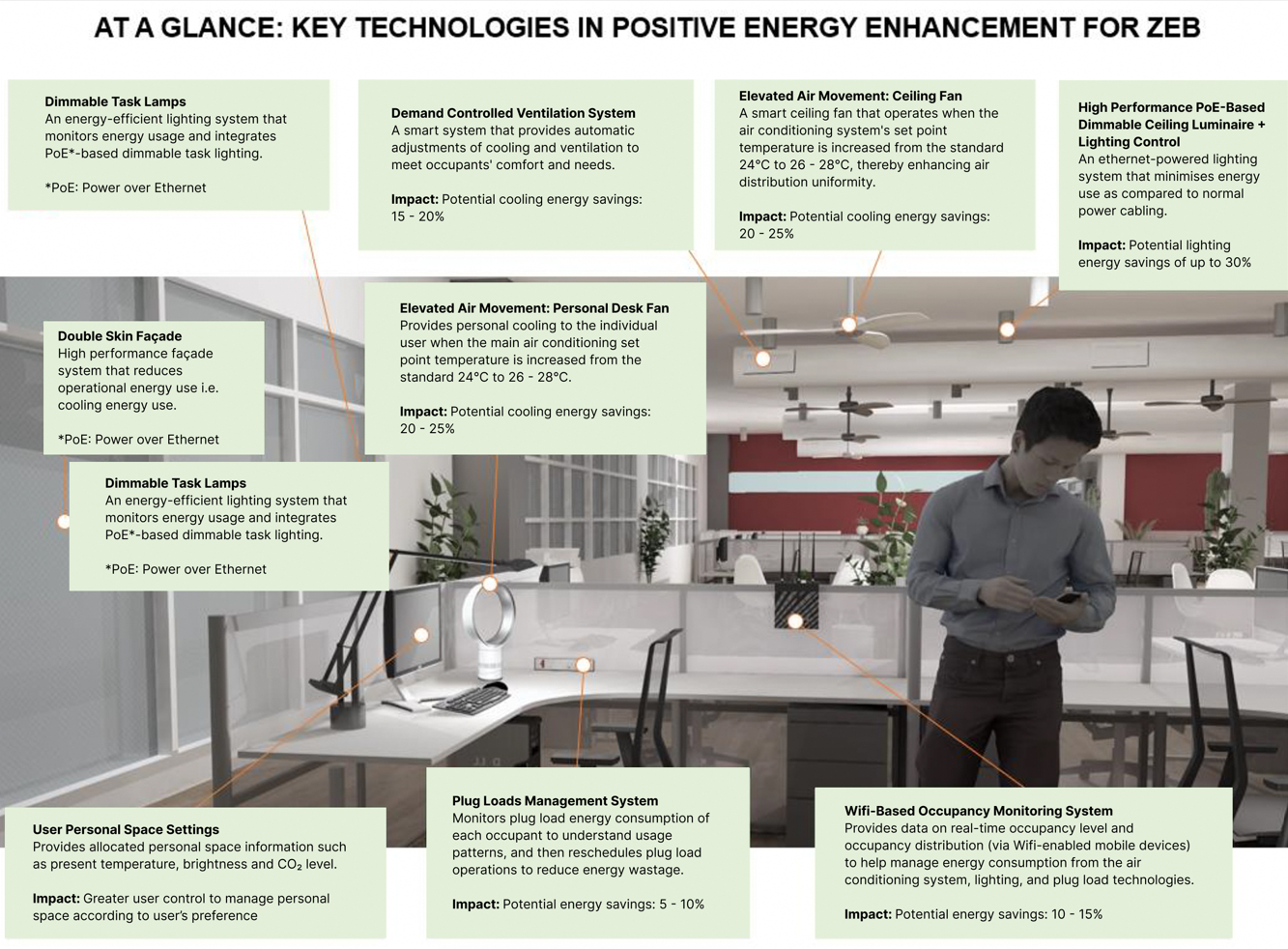
This transformation was completed in 2022, heralding the arrival of ZEB Plus. With the integration of green technologies into its working spaces, the building innovations in ZEB Plus showcase what office buildings of the future could look like.
With an upgraded solar photovoltaic (PV) system, the building now successfully achieves over 20% energy surplus and has improved its energy efficiency by 77% compared to a 2005 baseline.
Mixed-Mode Ventilation Technologies
BCA explored a novel approach to cooling spaces with reduced energy consumption. This project was a collaboration with the National University of Singapore (NUS), Singapore Institute of Technology (SIT), Kajima Corporation, and Surbana Jurong Private Limited under the Cities of Tomorrow (CoT) R&D programme.
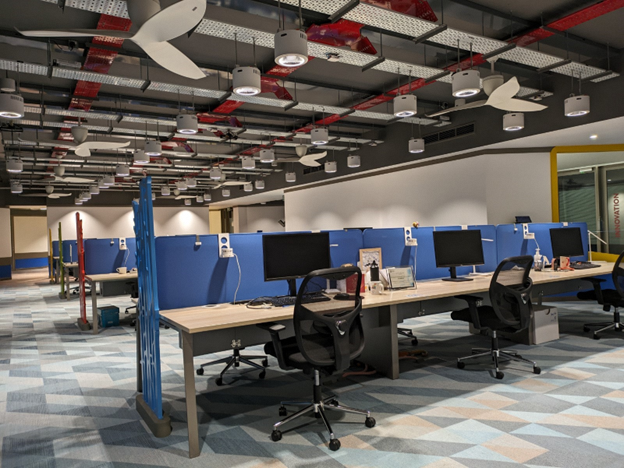
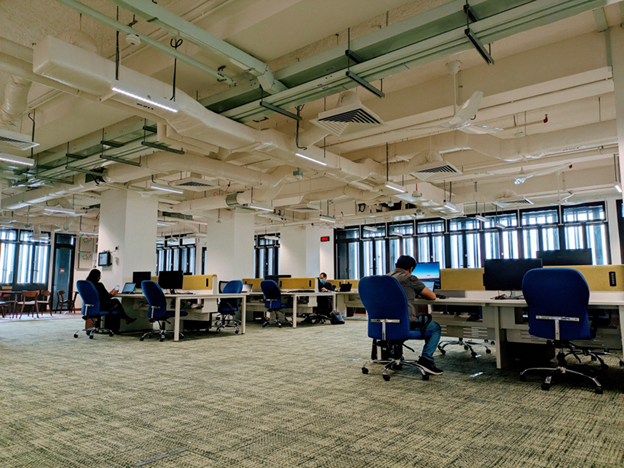
This approach combined natural ventilation through automated windows, ceiling fans for air movement, personal ventilation desks for spot cooling, and background cooling from the ACMV system. It optimised natural ventilation when possible, reducing reliance on energy-intensive air-conditioning. This helped to promote urban sustainability by cutting cooling energy use.
At the same time, the team was also developing an occupant-centric sensing and control framework to optimise mixed-mode ventilation, balancing energy savings with a comfortable indoor environment.
A proof-of-concept experiment in a 45m² testbed achieved a 55% reduction in cooling energy over two weeks. A full-scale demonstration was underway at Level 14, Block E of the BCA Braddell Campus, in an open-plan office space occupied by Azendian Solutions.
Discover the spaces at BCA’s Braddell Campus to bring your innovative solutions to life today.